Backgrounds with Multiple Uses: A Practical Guide to Versatile Stationery Designs
In the realm of digital stationery and print-on-demand resources, finding a design that balances aesthetic appeal with functional flexibility is often a challenge. Many creators find themselves cycling through seasonal templates or hyper-specific themes that limit their creative output once a trend passes. This is where Backgrounds with Multiple Uses become an essential asset for designers, educators, and hobbyists alike. These designs are engineered not just to look good, but to serve as a foundational layer for a wide array of projects throughout the entire year.
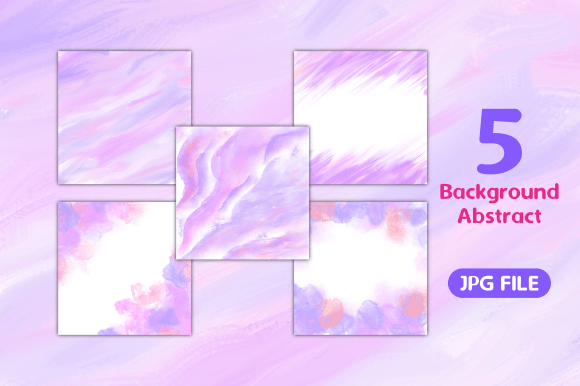
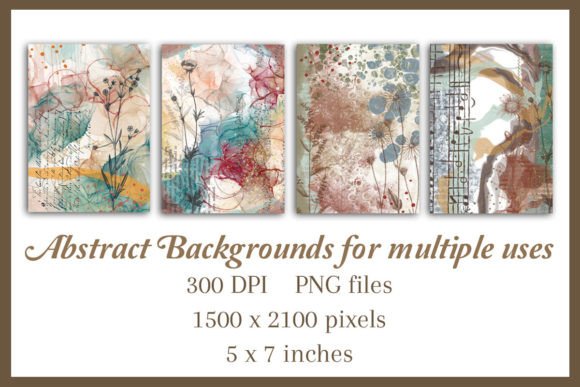
The specific collection in focus offers four distinct abstract backgrounds created using a blend of traditional artistic techniques and digital refinement. By utilizing splashes, alcohol inks, and custom brushes, these files achieve a texture and depth that flat vector graphics often lack. The color palette strategically mixes earthy warm tones with cool accents, creating a neutral yet dynamic visual language suitable for any season. For those evaluating whether this resource fits their workflow, understanding the technical specifications, artistic nuances, and practical applications is crucial.
Defining the Value of Versatile Abstract Backgrounds
Backgrounds with Multiple Uses refers to a category of digital assets designed to transcend specific occasions. Unlike a template explicitly branded for "Summer Sale" or "Winter Holidays," these backgrounds rely on abstract forms and balanced color theory to remain relevant regardless of the calendar month. The distinct advantage here is longevity. A user investing time or money into a design wants to maximize its utility over time, rather than discarding it after a single project.
The four abstract pieces discussed here leverage the organic nature of fluid art. Alcohol ink, known for its vibrant flow and unpredictable patterns, creates unique textures that mimic natural phenomena like stone, water, or foliage without being literal representations. When combined with earthy hues—such as terracotta, sage, ochre, and slate blue—the result is a sophisticated backdrop that feels grounded. This approach allows the background to recede when necessary, letting text or other graphic elements take center stage, or to pop forward as the primary visual interest.
From a technical standpoint, the versatility is supported by high-resolution standards. Each file is provided at 300 dpi, measuring 1500 x 2100 pixels. This resolution ensures crisp printing for standard sizes, specifically optimized for 5 x 7 inch formats. The use of PNG format guarantees transparency where needed and preserves the integrity of the ink splashes without compression artifacts that can plague JPEG files. For professionals who require consistent quality across different devices and printers, these specifications are non-negotiable.
Comparing Digital Assets: Custom Textures vs. Stock Vectors
When comparing Backgrounds with Multiple Uses to other options available in the market, the distinction lies primarily in the creation method and the resulting visual texture. Standard stock vector backgrounds are often geometric, clean, and perfectly symmetrical. While these have their place in corporate branding or minimalist UI design, they frequently lack the tactile quality required for personal stationery, greeting cards, or artistic journals.
In contrast, the backgrounds created with splashes and alcohol inks offer a sense of human touch. The irregularity of the ink flow introduces a level of complexity that makes each piece feel handcrafted. This is a significant tradeoff to consider: while vectors are infinitely scalable and easy to edit, they can appear sterile. The textured nature of these PNG files provides depth that vectors struggle to replicate without complex rendering.
Another comparison point is against seasonal photo backgrounds. High-resolution photography is beautiful but often too busy for stationery. A background featuring a forest scene or a beach sunset immediately dictates the mood and limits the context of the document. If you try to overlay formal text on a busy photograph, readability suffers. Abstract backgrounds, however, provide negative space and visual rhythm without overwhelming the content. They act as a supportive canvas rather than a competing element.
Furthermore, the cost-benefit analysis favors versatile backgrounds. Purchasing separate assets for every holiday or season can quickly inflate a project budget. By selecting a set of Backgrounds with Multiple Uses, a user secures a toolkit that covers spring pastels, summer warmth, autumn earthiness, and winter coolness all within one cohesive collection. This consolidation simplifies inventory management for small businesses and reduces decision fatigue for individual creators.
Evaluating Technical Specifications and Print Considerations
For anyone planning to print these designs, understanding the relationship between digital files and physical output is vital. The files are delivered at 300 dpi with dimensions of 1500 x 2100 pixels, which corresponds perfectly to a 5 x 7 inch print size. This is the industry standard for high-quality offset and home inkjet printing. At this resolution, the fine details of the alcohol ink splashes and brush strokes will render sharply, avoiding the pixelation that occurs with lower-resolution images.
However, users must be aware of the variables involved in the printing process. It is important to note that some images may print a bit differently due to your printer settings and the printer you use in general. Home printers often interpret colors differently than professional commercial presses. A deep teal that looks vibrant on a calibrated monitor might appear slightly muted on uncoated paper from a consumer-grade printer.
To mitigate this, it is advisable to perform a test print before committing to a large batch. Adjusting the color profile in your printer driver to match the paper type (e.g., matte, glossy, or cardstock) can significantly alter the final outcome. The earthy warm and cool colors in these backgrounds are designed to be forgiving, but slight shifts in saturation are normal. Additionally, because these are PNG files, they do not carry embedded watermarks in the final download. The preview images you see during the selection process may contain watermarks, but the actual files you receive will be clean and ready for immediate use.
Best-Fit Situations and Practical Applications
Determining when Backgrounds with Multiple Uses are the right choice depends heavily on the intended application. These designs excel in scenarios requiring a balance of professionalism and creativity. For instance, they are ideal for:
- Personal Stationery: Creating custom letterheads, envelopes, or notepads where a generic white page feels too plain, but a loud pattern is distracting.
- Greeting Cards: Designing anniversary, birthday, or thank-you cards where the background sets a tone without dictating a specific message.
- Journaling and Planners: Using the 5 x 7 inch format for bullet journal covers, weekly planner inserts, or scrapbook pages.
- Small Business Branding: Developing packaging tissue paper, invoice headers, or social media story templates that need to maintain a consistent brand identity year-round.
The mix of warm and cool colors makes these backgrounds particularly effective for transitional periods. In late autumn, the earthy tones resonate with the changing leaves, while the cool accents hint at the approaching winter. Conversely, in early spring, the same cool tones suggest melting snow, while the warm hues evoke the returning sun. This adaptability means the user does not need to constantly update their design library.
However, there are situations where these backgrounds may not be the optimal solution. If a project requires strict adherence to a corporate color guide with specific hex codes, the organic nature of alcohol ink might introduce slight variations that fall outside compliance. Similarly, if the design requires precise alignment with grid lines or technical diagrams, the irregular edges of the ink splashes could interfere with readability. In such cases, a cleaner, more structured vector background might be preferable.
Decision Factors for Selecting Your Resources
When deciding whether to integrate these Backgrounds with Multiple Uses into your workflow, consider your long-term goals. Are you looking for a quick fix for a single event, or are you building a sustainable design system? If the latter, the investment in high-quality, textured, and versatile assets pays dividends over time. The ability to reuse the same files for various projects reduces the time spent searching for new inspiration and allows you to focus on content creation.
Also, evaluate your technical comfort level. While these files are ready to use as-is, having the ability to manipulate them slightly—perhaps adjusting opacity or adding overlays—can further expand their utility. The high resolution allows for cropping or resizing within reason, though staying close to the original 5 x 7 inch ratio ensures the best quality. If you are working with limited storage or bandwidth, the PNG format is generally efficient, though larger than compressed JPEGs, the quality retention is worth the extra file size for print purposes.
Ultimately, the value of these backgrounds lies in their neutrality and texture. They provide a sophisticated starting point that elevates simple text documents into visually engaging pieces. By choosing resources that embrace the unpredictability of fluid art and the reliability of high-resolution digital files, you equip yourself with tools that are as adaptable as your own creativity. Whether you are a seasoned designer or a hobbyist exploring new avenues, having a set of Backgrounds with Multiple Uses ensures that your stationery remains fresh, functional, and aesthetically pleasing throughout the year.